
Buying a plot in Lucknow: five checks before you invest
A sensible Lucknow plot shortlist brings together five things: useful access, independently checked documents, infrastructure that fits your timeline, credible development commitments and a realistic exit plan. A low asking rate or a future-project announcement is not enough.
This guide develops the five checks in the supplied Regrob Short into practical buyer questions. It does not rank localities by expected returns or confirm any plot for sale. Your budget, plot size, construction plans and holding period should shape the shortlist.
Watch Regrob’s Lucknow plot-buying checklist
The supplied Short and written brief are the starting point for this educational guide. No specific plot, price, project approval or return forecast is established here.
1. Location and connectivity: follow the complete journey
Choose a plot whose actual access works for the way you expect to use it. A corridor name or highway reference does not establish the condition, legality or convenience of the last stretch to the land.
The supplied brief names Sultanpur Road, Faizabad Road and Kanpur Road as corridors to investigate, alongside Amar Shaheed Path, Gomti Nagar Extension and Outer Ring Road locations. These are research starting points, not recommendations that every plot in those markets is suitable.
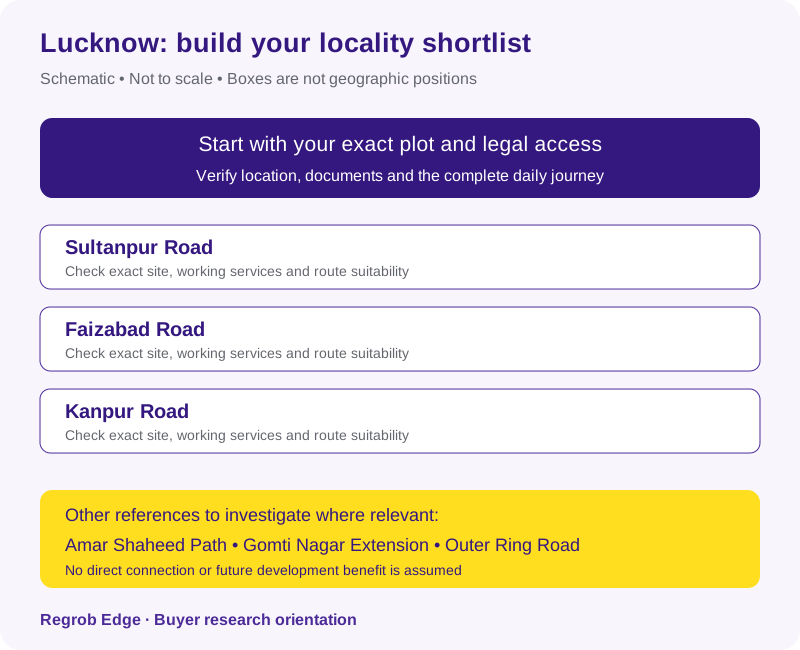
Locality advantages: translate a corridor into daily convenience
For each offered plot, record the legal approach, usable road width, junction movements and route to your actual workplace or family destinations. Visit during ordinary travel hours and, where practical, inspect drainage and access after rain.
If metro access or the airport matters, verify the relevant operational service and the complete route. Do not assume walkable station access or a short airport journey from a broad locality label. No station distances or travel times have been independently measured for this guide.
2. Government approvals and title: verify separately
A plot needs checks on ownership, permitted use, approved layout and construction eligibility. Registration of a sale deed is not, by itself, proof that a residential layout is approved or that your intended building can be sanctioned.
Identify the authority responsible for the specific site. The Lucknow Development Authority is a relevant starting point for sites within its jurisdiction; do not assume it is the only competent authority for every location marketed as Lucknow.
- Ownership: have an independent property lawyer examine the title chain, seller authority, encumbrances and relevant litigation.
- Plot identity: reconcile survey/khasra references, dimensions, boundaries and area units with the approved layout and physical site.
- Land use: confirm the proposed residential use and any required permissions rather than assuming agricultural or other land can be built upon.
- Layout and access: check sanction documents and legally documented road access, not just a sales drawing.
- Construction: establish applicable setbacks, permitted building envelope, approvals and any deadlines or restrictions.
For a plotted development where registration is applicable, check the exact project and phase on UP RERA. If someone claims exemption, ask for the basis and have it reviewed independently. A registration number does not certify clear title, every permission or guaranteed delivery.
3. Future growth: separate an announcement from a usable benefit
Future infrastructure can be relevant, but its effect on a particular plot is uncertain. Establish what is proposed, approved, funded, under construction and operating before assigning a benefit to the purchase price.
The supplied brief mentions IT hubs, educational institutions, malls and SEZs as possible demand influences. No particular new development or completion schedule is verified here. A named future project should be checked against the responsible authority’s current documents and the actual access route from the plot.
Match infrastructure timing to your own plans
If you intend to build soon, existing roads, utilities and surrounding occupancy may matter more than a longer-term story. If you can hold land for several years, assess carrying costs and what happens if infrastructure takes longer than expected. Neither scenario establishes a numerical appreciation forecast.
Review the current land-use plan for the surrounding area as well as the plot. An open view today should not be treated as a permanent protected outlook without documentary support.
4. Developer reputation and amenities: ask what is committed in writing
For a developer-led layout, investigate comparable completed projects and how roads, utilities, drainage and common areas were delivered and maintained. Brand familiarity and an attractive entrance are not substitutes for evidence.
Request the approved scope, delivery schedule, payment milestones and maintenance arrangement for your phase. Ask which services are connected today, which are pending and who bears connection or development costs.
- Check road access, water, sewerage or approved disposal arrangements, drainage and electricity.
- Verify the boundary and security arrangements without assuming a gated description guarantees effective access control.
- Ask whether parks or shared facilities are included in the approved layout and when they can be used.
- Understand recurring charges, responsibility for repairs and the future management structure.
UP RERA’s plotted-development registration guidance includes infrastructure activities such as roads, water, sewers, drains and street lighting. That is a useful reminder to assess delivery of basic services alongside lifestyle amenities.
5. Resale and rental potential: keep the assumptions realistic
A vacant residential plot does not automatically generate rent. Any future rental income from a house requires permitted construction, additional capital, completion and an actual tenant. Do not describe a bare plot as an income-producing home without that distinction.
For resale, look for credible comparable transactions and understand how they differ in area, road frontage, title, approval status, services and location. Asking advertisements show seller expectations, not necessarily the price a buyer will pay.
Define your likely exit buyer
A family seeking a buildable plot may value working services and clear documents differently from a long-term land investor. Consider whether the plot dimensions, full ticket size and construction constraints suit a realistic future buyer.
Allow for transaction costs, maintenance, finance and the possibility that a sale takes time. No locality in this guide is presented as offering assured returns, guaranteed demand or a safe exit at a particular price.
Build a total-cost comparison before shortlisting
Use the same area unit across offers and verify conversions carefully. Record the exact plot extent, asking rate, base consideration, applicable taxes and registration, transfer charges, development obligations, utility costs and recurring dues.
Keep future building costs separate from land acquisition. Our purchase budget guide can help organise the full outlay, while the site visit checklist helps turn marketing claims into observations and document requests.
How to discuss a Lucknow plot shortlist with Regrob
Share your approximate total budget, preferred plot size, whether you intend to build and the destinations you need to reach. Those details support a useful locality discussion without starting from a blanket “best investment” claim.
Use the callback form beside this guide to request that discussion. Any property option still needs current availability, price and independent document verification. This article makes no project-specific offer.
Frequently asked questions
Which area is best for buying a plot in Lucknow?
No area is universally best. Compare the exact plot’s documents, access, services and total cost against your purpose and holding period.
Is an LDA reference enough to establish approval?
No. Verify the actual documents, scope, site identity and competent authority. A general approval claim does not establish clear title or permission for every advertised plot.
Does every plot require RERA registration?
Applicability depends on the development and legal circumstances. Check the exact project/phase and independently review any claimed exemption rather than assuming every standalone transaction is identical.
Can an empty plot provide rental income?
Not automatically. Rental assumptions for a future home must account for permitted construction, costs, timing, occupancy requirements and tenant demand.
Does the map show exact plot locations?
No. It groups the localities discussed as a research checklist. Use approved layouts and a verified site location for any actual property decision.
Sources and verification scope
Prepared 2 November 2026. Sources: supplied Regrob Short and written summary; UP RERA project-registration guidance and public registration portal. No site survey, locality-price series, specific infrastructure delivery forecast or project approval audit was completed. Seek independent legal and technical advice before committing funds.